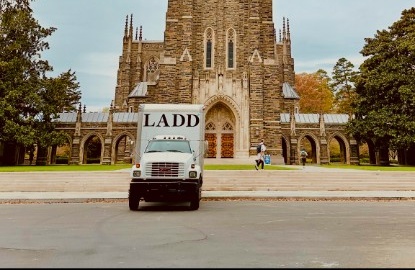
A school move has a hard start and a hard finish, and neither of them negotiates. The building empties when the term ends and it has to be usable before staff return. Everything about how these jobs run comes out of that.
The calendar is the constraint, not the volume
Most commercial moves can flex by a few days. A school move cannot. If a classroom is not ready, the first week of term happens around boxes. That means the plan has to be built backwards from the return date, with the slack sitting in the middle rather than at the end.
It also means the survey has to happen months earlier than feels necessary. By the time the building is empty, everyone who knows what is in it has gone for the summer.
Nobody is there to answer questions
This is the practical difference from an office move. In an office, if a crate is unlabelled somebody walks over and identifies it. Over a summer break, the person whose room it is may be unreachable for six weeks.
So the labelling has to survive the absence of the person who packed it. That means room-to-room labels applied before the building empties, an inventory that matches, and a floor plan for the destination that a crew can follow without asking anyone.
What tends to go wrong
- Shared and unclaimed space. Storage rooms, supply closets, the cupboard in the corridor. These belong to nobody, so nobody packs them, and they are still full on move day.
- Departments that were never surveyed. A move approved for three floors that turns out to include a basement archive.
- Building work running late. Painting, flooring and data cabling are usually happening in the same window. When they slip, the move window compresses rather than moves.
- Elevators and access. One service elevator for a whole building sets the pace of the entire job regardless of crew size.
- Records with retention rules. Student files and personnel records have handling requirements that a general crew will not know about unless told.
Specialist items inside an ordinary move
Schools are full of things that are not furniture. Pianos in the music department, kilns in art, library shelving that has to come apart and go back in order, science equipment, and instruments that belong to individuals rather than the institution.
Each of those wants its own handling and, in some cases, its own day. Our guides on moving a piano and moving antiques cover two of the more common ones.
A sequence that works
- Survey in the spring, while the people who know the building are still in it.
- Agree the destination floor plan before anything is packed, not during.
- Label by destination room, not by origin room. The crew is unloading, not remembering.
- Move the specialist items on their own day, separate from the bulk.
- Build the schedule to finish a week early. Something will slip, and that week is the plan.
Talking to us early costs nothing
The useful conversation for a school move happens in March, not June. If you have a summer window coming and you want a realistic read on whether it is achievable, get in touch and we will walk the building with you.
Moving in the Triangle?
Five generations of Durham movers. Free estimates, no obligation.
Get a Free Estimate Call 919-596-2469