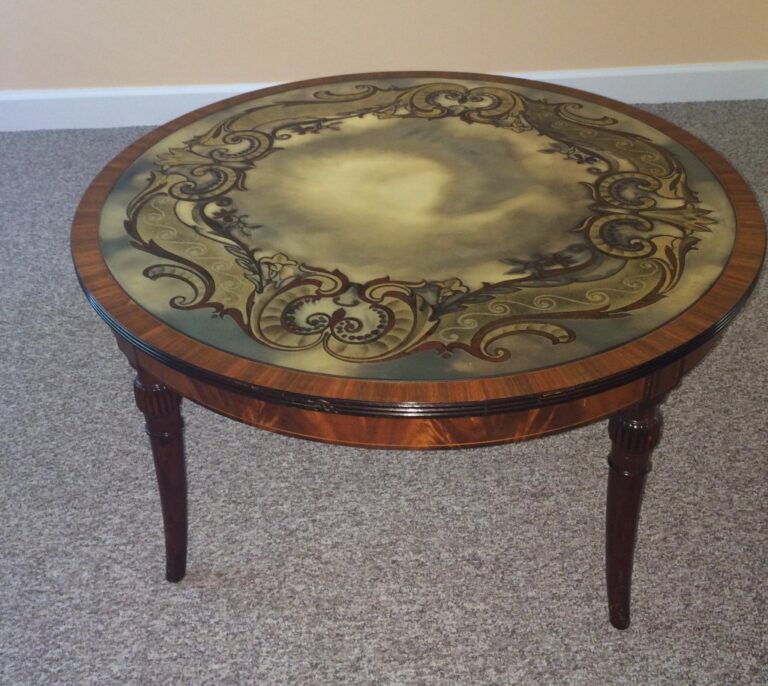
Our tagline is "we moved your antiques when they were new," and it isn't entirely a joke. The company started in 1882, and some of the furniture we handle in Durham today was in Durham houses then.
Antiques don't break randomly. They break in the same handful of ways, every time.
1. Veneer lifts
Nineteenth-century veneer was laid with hide glue, which softens with heat and humidity. A hot truck in a Carolina July is exactly the wrong environment. Antiques should be the last thing loaded and the first thing unloaded, and they should never sit against the sunny wall of a trailer.
2. Marble cracks under its own weight
A marble top is strong in compression and weak in bending. Carried flat, it can snap along a vein under nothing more than its own weight. Marble travels vertically, on edge, padded and strapped upright, never lying down in the truck bed, and never left flat on a dolly.
3. Hand-cut joints let go
Dovetails and mortise-and-tenon joints from before mass production are strong in the direction they were designed for and weak in every other direction. Lifting a case piece by its top, or by a drawer opening, puts load through the joint sideways. Lift from the base. Always.
4. Glass doors flex
Old glass is thinner and less uniform than modern glass, and a china cabinet door has almost no rigidity when the cabinet is empty and being carried. Doors get taped shut, glass gets padded, and where it's practical, glass panels come out and travel separately.
5. Finishes react to what you wrap them in
Plastic shrink wrap directly against shellac or old lacquer will trap moisture and can leave the finish clouded or tacky. Pads go on first, always. Plastic, if it's used at all, goes over the pad, never against the wood.
The checklist
- Photograph every piece from multiple angles before it's touched. This is your condition record.
- Empty drawers and cabinets completely, the contents shift and the weight stresses the joints.
- Remove and separately wrap: marble, glass, mirrors, removable shelves, finials, pulls that unscrew.
- Pad first, plastic second, never plastic first.
- Load last, unload first, keep out of direct sun.
- For anything appraised, tell your mover the value before the move, not after. Valuation coverage has to be arranged in advance.
The part nobody plans for
Where does it go in the new house? An antique that survives the truck and then sits for a month in a garage with a swing in humidity has been damaged by the move, just slowly. Decide the destination room before move day, and make sure it's climate-controlled.
See how we handle antiques and heirlooms →
Moving in the Triangle?
Five generations of Durham movers. Free estimates, no obligation.
Get a Free Estimate Call 919-596-2469